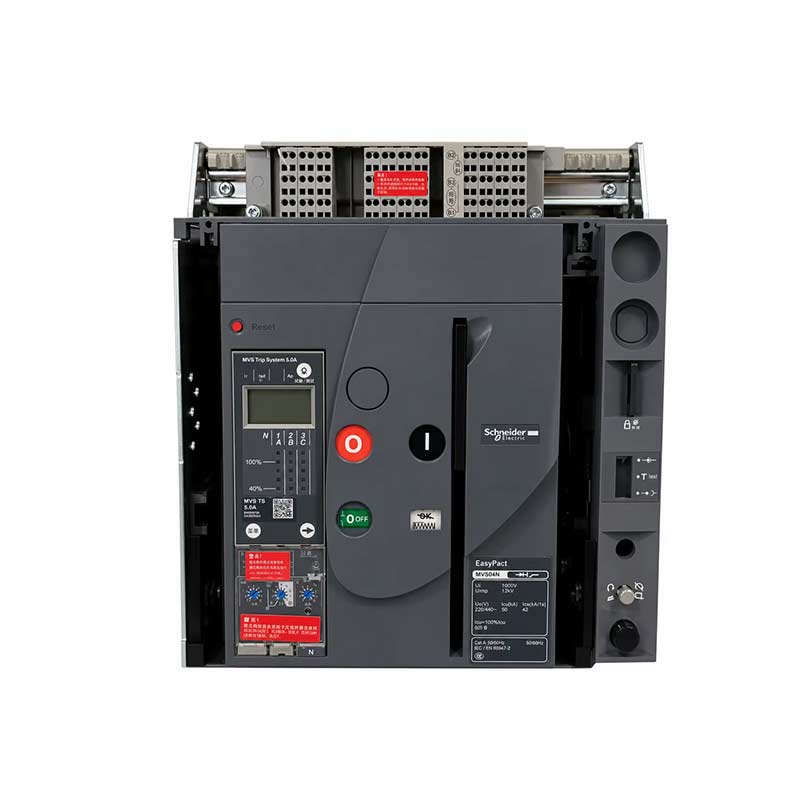
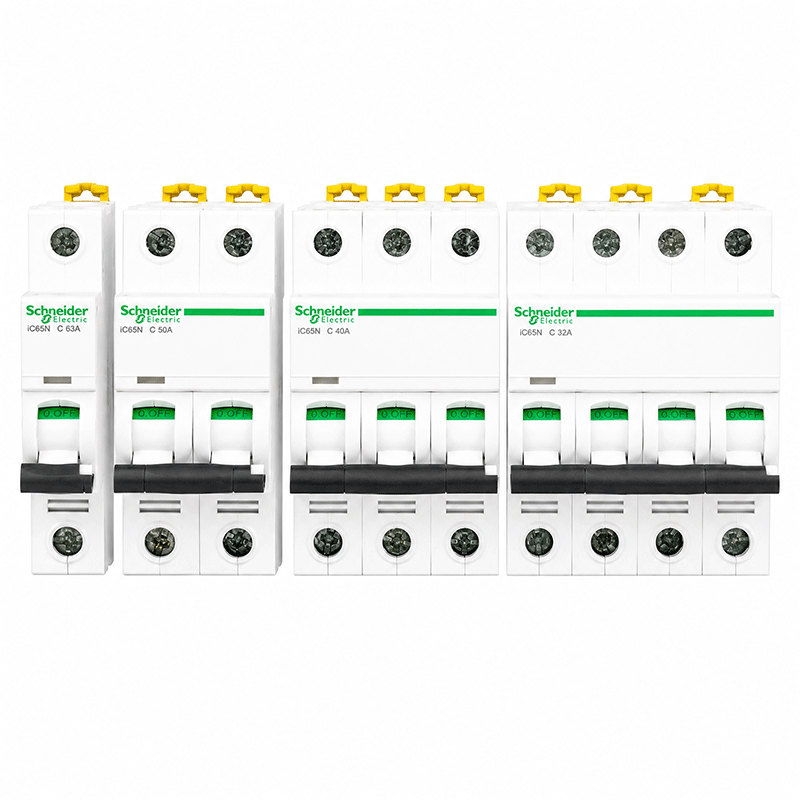
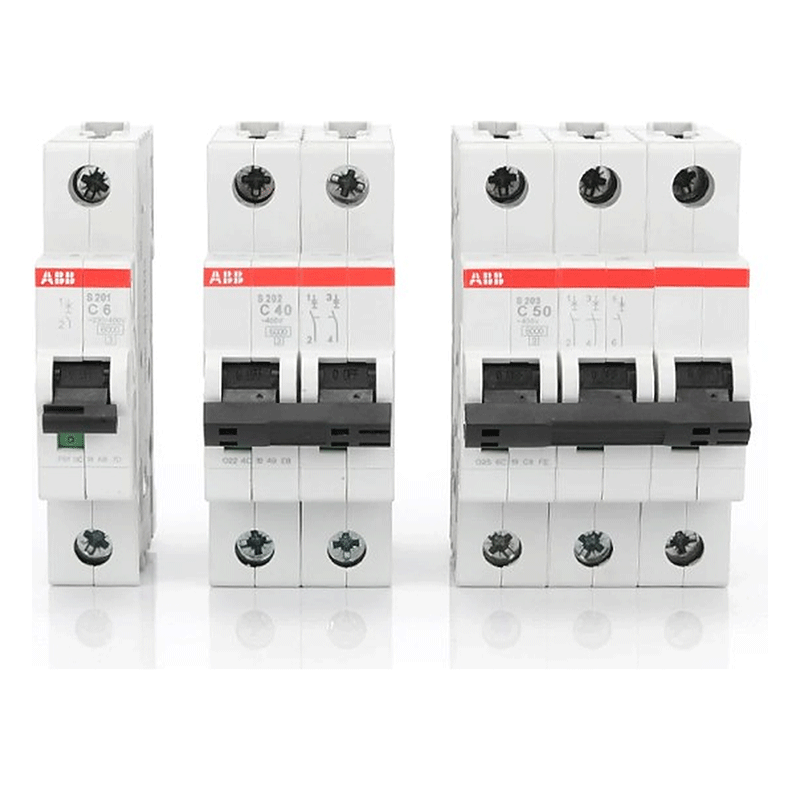
How to Choose a Schneider MCB?
Choose a Schneider MCB by matching its rated current to the load and cable, selecting the correct pole configuration, and verifying its breaking capacity and trip curve.
A miniature circuit breaker (MCB) protects electrical circuits against overloads and short circuits. When selecting a Schneider Electric MCB, it is important to consider the circuit's operating conditions, conductor capacity, expected fault current, and the type of connected load. Understanding the markings on an MCB also helps you identify the right product and verify its specifications before ordering.
How to Choose the Right MCB Current Rating?
The correct MCB current rating depends on the circuit's expected operating current, the current-carrying capacity of its conductors, and the installation conditions. Choosing an MCB with a rating that is too low may cause unnecessary tripping, while an oversized rating may fail to provide adequate protection for the wiring.
Understand the Rated Current (In)
The rated current, expressed in amperes (A), indicates the current rating assigned to the MCB under its specified operating conditions. For example, a Schneider MCB marked C16 has a rated current of 16 A and a Type C tripping characteristic.
Common MCB current ratings include 6 A, 10 A, 16 A, 20 A, 25 A, 32 A, 40 A and 63 A, although the available ratings depend on the product range.
Match the MCB Rating to the Load and Cable
Start by determining the design current of the circuit. Then check the cable's permitted current-carrying capacity under the actual installation conditions, including the wiring method, ambient temperature, and grouping with other cables.
A common coordination principle is:
Ib ≤ In ≤ Iz
- Ib: The design current of the circuit.
- In: The rated current of the MCB.
- Iz: The current-carrying capacity of the conductor after applicable installation corrections.
This relationship is a useful starting point, but the complete protection requirements and applicable electrical installation standards must also be checked.
For example, a circuit designed to carry 18 A might require an MCB with a 20 A rating, provided the cable can safely carry that current and all other protection conditions are satisfied. The final selection must be based on the actual circuit design rather than the load current alone.
Consider the Type of Load
Different loads have different operating characteristics. Lighting and resistive heating circuits may have relatively predictable current demands, while motors, transformers, and some power supplies can draw substantially higher current during startup or energization.
- Lighting circuits: Consider the total load, cable capacity, and the inrush current of LED drivers or other electronic equipment.
- Socket and general-purpose circuits: Account for the expected connected equipment and the circuit's intended use.
- Motor circuits: Consider starting current, running current, and the motor protection arrangement.
- Commercial and industrial distribution: Check the load profile, conductor capacity, fault level, and coordination with upstream and downstream protective devices.
For Schneider MCB selection, verify that the chosen product range offers the required rated current, voltage, tripping characteristic, and breaking capacity. Do not select a larger current rating simply to prevent unwanted tripping without first investigating its cause.
1 Pole vs 2 Pole vs 3 Pole vs 4 Pole MCB
The pole configuration determines how many circuit conductors the MCB switches and, depending on the design, which conductors receive overcurrent protection. The appropriate configuration depends on the electrical system, whether a neutral conductor is present, and the applicable isolation requirements.
| MCB Configuration | Typical Application | Key Consideration |
|---|---|---|
| 1P | Single-phase circuits with a single live conductor to be protected | Typically protects and switches the live conductor. |
| 1P+N | Single-phase circuits with live and neutral conductors | Typically provides overcurrent protection on the live pole and switches the neutral according to the product design. |
| 2P | Single-phase circuits requiring two-pole switching | Check which poles are protected and whether both conductors are switched. |
| 3P | Three-phase circuits without a switched neutral | Switches the three phase conductors; protection functions depend on the device design. |
| 3P+N | Three-phase circuits requiring neutral switching | Check whether the neutral is switched, protected, or both according to the specific product. |
| 4P | Three-phase circuits requiring four-pole switching | Typically switches three phases and neutral, with neutral protection depending on the model. |
How Do You Choose the Correct Number of Poles?
For a typical single-phase circuit, a 1P MCB may be suitable where only the live conductor needs to be switched and the applicable requirements permit this arrangement. Where neutral switching is required, a suitable 1P+N or 2P device may be appropriate.
For a three-phase circuit without a neutral, a 3P MCB is commonly used. If the circuit requires neutral switching, a suitable 3P+N or 4P device may be necessary.
However, these configurations are not automatically interchangeable. A 1P+N device does not necessarily provide the same protection as a 2P device, and a 3P+N product may differ from a 4P product in its neutral-pole design. Always check the wiring diagram, protected-pole designation, and manufacturer's technical documentation.
Before selecting a Schneider MCB, confirm the supply arrangement, the conductors that must be disconnected, and the applicable isolation and protection requirements. A protective earth conductor must not be switched or interrupted by an MCB, and a PEN conductor must not be disconnected in a TN-C arrangement.
What Breaking Capacity (kA) Do You Need for an MCB?
The breaking capacity of an MCB indicates the short-circuit current it is rated to interrupt under specified conditions. It is an essential selection factor because a fault can produce a current far greater than the circuit's normal operating current.
Understand MCB Breaking Capacity Ratings
MCB breaking capacity is commonly expressed in kiloamperes (kA). For example, 4.5 kA, 6 kA and 10 kA are ratings found on various miniature circuit breakers, although available values vary by product range, rated voltage, and applicable standard.
The required breaking capacity must be appropriate for the prospective short-circuit current at the installation point. The available fault current depends on factors such as the supply source, transformer characteristics, conductor impedance, and the location of the MCB in the distribution system.
For example, if the calculated prospective short-circuit current at the installation point is 5 kA, an MCB rated to interrupt only 4.5 kA under the applicable conditions would not be adequate on its own. A suitable device with sufficient rated breaking capacity, or a manufacturer-validated protective arrangement, must be selected.
Check the Applicable Standard and Rating
Two standards commonly encountered in MCB documentation are IEC 60898-1 and IEC 60947-2. Their applicability depends on the intended use and the product's declared conformity.
- IEC 60898-1: Covers circuit breakers for overcurrent protection in household and similar installations within the scope of the standard. The rated short-circuit capacity is commonly identified as Icn.
- IEC 60947-2: Covers circuit breakers within the scope of the standard for low-voltage switchgear and controlgear. Product documentation may specify the ultimate short-circuit breaking capacity (Icu) and the service short-circuit breaking capacity (Ics).
These ratings should not be treated as interchangeable without checking the relevant standard, voltage, and product specifications. The same MCB may have different declared breaking capacities under different standards or at different operating voltages.
Is a Higher kA Rating Always Better?
A higher breaking capacity can provide a greater ability to interrupt fault current, but the highest available rating is not automatically the best choice for every circuit. The device must also satisfy the required voltage, current rating, tripping characteristics, mounting requirements, and coordination with other protective devices.
Where a circuit breaker relies on backup protection or cascading from an upstream protective device, the arrangement must be supported by the manufacturer's verified coordination data for the relevant devices and installation conditions.
When selecting a Schneider MCB, calculate or obtain the prospective short-circuit current at the installation point, then verify the breaking capacity in the relevant Schneider Electric product datasheet. Never choose a kA rating based solely on the current rating of the circuit.
B Curve vs C Curve vs D Curve MCB
The tripping curve describes the MCB's response to overcurrent, including the magnetic trip response to high instantaneous currents. Choosing the correct curve helps provide suitable protection while reducing unnecessary tripping during normal load startup.
| Tripping Curve | Typical Instantaneous Magnetic Tripping Range | Common Application Considerations |
|---|---|---|
| Type B | 3–5 × In | Loads with relatively low inrush current, such as many resistive loads and some lighting circuits. |
| Type C | 5–10 × In | General commercial and industrial circuits with moderate inrush current, subject to circuit conditions. |
| Type D | 10–20 × In | Loads with high inrush current, such as certain motors and transformers, where the circuit design permits. |
These ranges are typical values under IEC 60898-1 and should be confirmed against the exact product and applicable standard. They describe the instantaneous magnetic tripping region, not a guarantee that the MCB will trip at one exact current value under every condition.
When Should You Choose a Type B MCB?
A Type B MCB is often considered for circuits with relatively low inrush current. It may be suitable for resistive loads and certain lighting circuits, provided the rated current, cable protection requirements, and fault-disconnection conditions are satisfied.
However, some LED drivers, electronic power supplies, and other equipment can produce substantial inrush currents. The actual load characteristics should therefore be checked before choosing a Type B device.
When Should You Choose a Type C MCB?
A Type C MCB is commonly considered for general commercial and industrial applications where connected equipment produces moderate inrush current. Examples may include certain small motors, transformers, and mixed-load circuits.
Type C should not be selected simply because an installation is commercial or industrial. The expected startup current, prospective fault current, and required disconnection time must all be considered.
When Should You Choose a Type D MCB?
A Type D MCB is designed for circuits with higher inrush currents that could cause an unsuitable lower-threshold device to trip during startup. Certain motor and transformer applications may require this characteristic.
Because a Type D MCB has a higher instantaneous magnetic tripping threshold, it may require a higher fault current to achieve instantaneous operation. Confirm that the circuit can still meet the required fault-disconnection time and protection conditions before choosing this curve.
Important: The tripping curve should be selected according to the actual load, not just the equipment category. If a circuit trips repeatedly, investigate overloads, inrush current, wiring faults, and the condition of the equipment before replacing the MCB with a different curve.
What Other MCB Nameplate Markings Should You Check?
Current rating, poles, breaking capacity, and tripping curve are the primary selection factors, but they are not the only markings that matter. Reviewing the complete nameplate helps verify that the chosen Schneider MCB matches the electrical system and the intended application.
Rated Operational Voltage
The rated operational voltage identifies the voltage conditions for which the MCB is specified. Confirm that the product is suitable for the circuit's nominal voltage, whether it is a single-phase or three-phase AC system, or a DC application where the product is specifically rated for DC use.
Do not assume that an MCB suitable for AC operation can also be used on a DC circuit. DC interruption requirements and the permitted voltage can differ significantly by product.
Product Series and Model Number
Schneider Electric offers MCBs across different product ranges, including Acti9 and Easy9. The model number identifies the specific product and its configuration. Products within the same brand may have different ratings, accessories, dimensions, and installation requirements.
Before ordering a replacement, compare the complete reference number and relevant technical specifications. Do not rely on appearance alone or assume that two MCBs are interchangeable because they share the same current rating and pole configuration.
Applicable Standards and Additional Markings
Check the declared standards, rated voltage, breaking-capacity markings, wiring diagram, and any relevant limitation-class information. These details help establish whether the MCB is suitable for the intended circuit and installation environment.
If the device is part of an existing distribution board, also verify compatibility with the mounting arrangement, busbar system, terminal connections, and required accessories.
Schneider MCB Selection Checklist
Before choosing or ordering a Schneider MCB, review the following information:
- Rated current: Confirm the design current and conductor capacity under actual installation conditions.
- Pole configuration: Determine whether the circuit requires 1P, 1P+N, 2P, 3P, 3P+N, or 4P switching and protection.
- Breaking capacity: Verify that the device can interrupt the prospective short-circuit current at the installation point under the applicable conditions.
- Tripping curve: Select B, C, or D according to load inrush characteristics, fault conditions, and required disconnection times.
- Operating voltage: Match the MCB to the system voltage and AC or DC application.
- Product reference: Confirm the complete Schneider Electric model number and the availability of the required configuration.
- Standards and compatibility: Check the applicable product standards, distribution-board arrangement, connections, and accessories.
For accurate selection, consult the official Schneider Electric product datasheet and applicable installation requirements. Schneider Electric's selection guidance also identifies pole count, curve code, ampere rating, breaking capacity, and operating voltage as key information needed to identify a suitable MCB.
Ultimately, selecting the right Schneider MCB requires more than matching a current rating. The pole configuration, short-circuit breaking capacity, tripping curve, operating voltage, and installation conditions must work together to provide appropriate circuit protection.
Need Help Selecting a Schneider MCB?
JIAHONG can help you identify Schneider Electric MCB models and review product specifications for your purchasing requirements. If you need assistance checking rated current, pole configuration, breaking capacity, tripping curve, or model compatibility, contact our team with your application details.